
On this page
The short answer
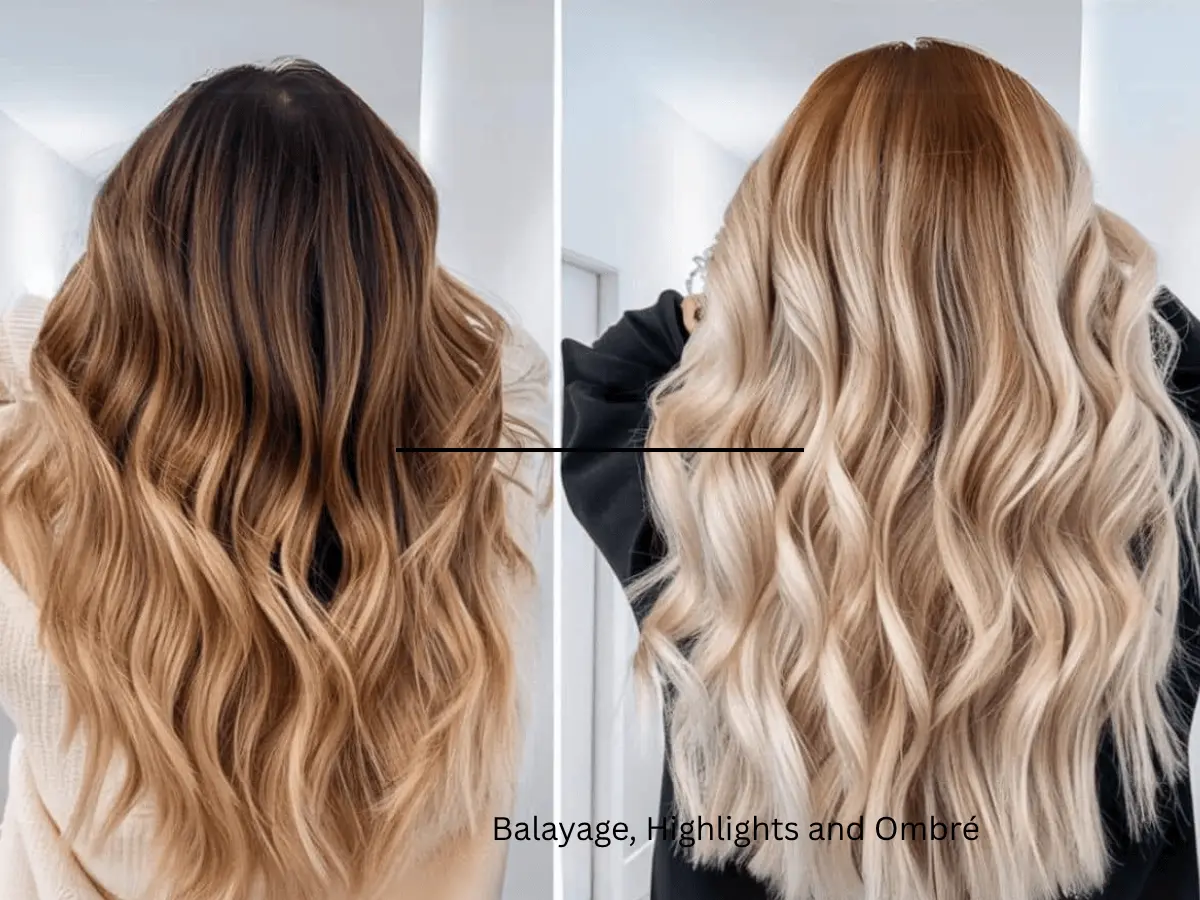
Balayage is a technique — lightener painted freehand onto the surface of the hair, heavier toward the ends, soft at the top. Highlights are a technique — sections woven out and saturated in foil from root to tip. Ombré is a result — a graduated shift from darker roots to lighter ends, which can be achieved using either technique.
That is the confusion at the heart of most of these searches: two of the three are methods of application and one is a finished effect.
Highlights: foil-based, saturated, root to tip
The stylist weaves out fine sections with the tail of a comb, places them on foil, applies lightener from root to tip and folds the foil closed.
Why foil matters: it isolates the section from surrounding hair and traps heat, which accelerates and intensifies lift. That is why foils achieve the lightest results and the most control at the root.
The look: defined, uniform brightness throughout the length, with a clear distinction between lightened and natural pieces. Traditional highlights read as brighter and more structured.
Growth pattern: because lightener sits right at the root, a visible line of demarcation appears as hair grows — usually noticeable at six to eight weeks, needing a retouch every eight to twelve.
Variations: babylights use very fine sections for a soft, sun-kissed effect that mimics natural childhood highlighting. Lowlights add darker pieces to restore depth to over-lightened hair.
Best for: all-over brightness, grey blending, fine hair needing the appearance of dimension, and anyone who wants a noticeable change.
Balayage: freehand, surface-painted, graduated
“Balayage” is French for “to sweep.” Lightener is painted directly onto the hair surface with a brush, applied lightly at the top of each section and built up toward the ends. It is usually processed in open air, sometimes with a film to control the developer.
Why the technique changes the result: surface application means the underside stays darker, creating natural-looking dimension. Feathering the lightener at the top means there is no hard start line.
The look: soft, sun-lightened, dimensional, with brightness concentrated through the mid-lengths and ends.
Growth pattern: this is balayage’s central advantage. Because the lightener never sits at the root, there is no demarcation line — it grows out softly. Retouches typically stretch to three to five months.
Best for: low-maintenance colour, natural-looking dimension, curly and wavy hair where placement can follow the curl pattern, and anyone who does not want to be back in the salon every eight weeks.
Its limit: freehand painting cannot lift as brightly at the root as foil can, so a dramatic all-over blonde is a foil job.
Ombré: a result, not an application method
Ombré describes a graduated transition from dark at the roots to light at the ends, with a distinct horizontal blend zone.
Sombré is the softer version, with a more gradual transition. A colour melt blends multiple tones so no line is visible at all.
The transition zone is what defines ombré. It can be created with foils, freehand painting, or a combination. Balayage frequently produces an ombré-like effect, which is exactly why the terms get used interchangeably — but a balayage is how it was applied, and an ombré is what it looks like.
Growth pattern: excellent, since the roots are usually left natural or deliberately darkened. Refreshes are needed mainly for tone rather than regrowth.
Comparing them
| Highlights | Balayage | Ombré | |
| What it is | Application method | Application method | Finished result |
| How applied | Woven sections in foil | Freehand surface painting | Either |
| Placement | Root to tip | Mid-length to ends | Graduated top to bottom |
| Regrowth line | Yes, visible | No | No |
| Retouch | 8–12 weeks | 3–5 months | 4–6 months |
| Look | Bright, uniform, defined | Soft, dimensional, natural | Graduated contrast |
The step nobody asks about: toner
Lightener removes pigment, and it does so in a predictable order — blue first, then red, leaving warm underlying tones exposed. Dark hair passes through red, then orange, then yellow as it lifts. Whatever the technique, freshly lightened hair almost always has unwanted warmth.
A toner is a demi-permanent colour applied afterwards that neutralises it, using the colour wheel: violet cancels yellow, blue cancels orange, green cancels red.
Two things follow. First, the toner is what makes lightened hair look expensive — colour that looks brassy is usually a toner problem, not a lightening problem. Second, toner is not permanent. It fades over four to eight weeks, which is why hair looks warmer a month in even with no regrowth, and why a toning refresh is a legitimate standalone appointment.
How each technique behaves on different hair
Curly hair favours balayage, because placement can follow the curl and brightness lands where the curl catches light. Foils flatten curl patterns during processing, making placement harder to judge. Curl also affects how colour reads — and how it is cut matters just as much.
Fine hair often does better with foils or babylights, since defined contrast creates the illusion of density that soft painting can miss.
Dark hair needs realistic expectations. Level 2–3 hair cannot reach pale blonde in one session without serious damage. Multiple appointments spaced weeks apart is the correct answer, and warm caramel and honey tones usually look better on dark bases than ashy ones.
Previously coloured hair lifts unevenly, especially with box dye in the history. Always disclose it.
Looking after colour
Sulphate-free shampoo, cool water, heat protectant, and UV protection in summer. Purple shampoo once weekly for blondes — daily use turns hair dull and violet.
If you are also considering a smoothing service, sequence matters: colour first, then wait about two weeks before keratin or nanoplastia. Why those treatments behave differently is worth reading before booking both.
Frequently asked questions
Which is better, balayage or highlights? Neither. Balayage grows out softly and suits low maintenance; foils give brighter, more uniform lift and better root coverage.
Is balayage cheaper to maintain? It generally needs fewer appointments — three to five months between retouches versus eight to twelve weeks for foils.
Can you do balayage on short hair? Yes, though it needs enough length for a gradient. Very short crops usually suit foil placement better.
How does balayage grow out? Softly and without a line, because the lightener never sits at the root. Most people go three to five months before it needs attention.
Written by Parull G Chandna at Kaaya Skin & Hair Studio, London, Ontario. See our hair colour services or browse our gallery for real client results.