
On this page
The difference in one line
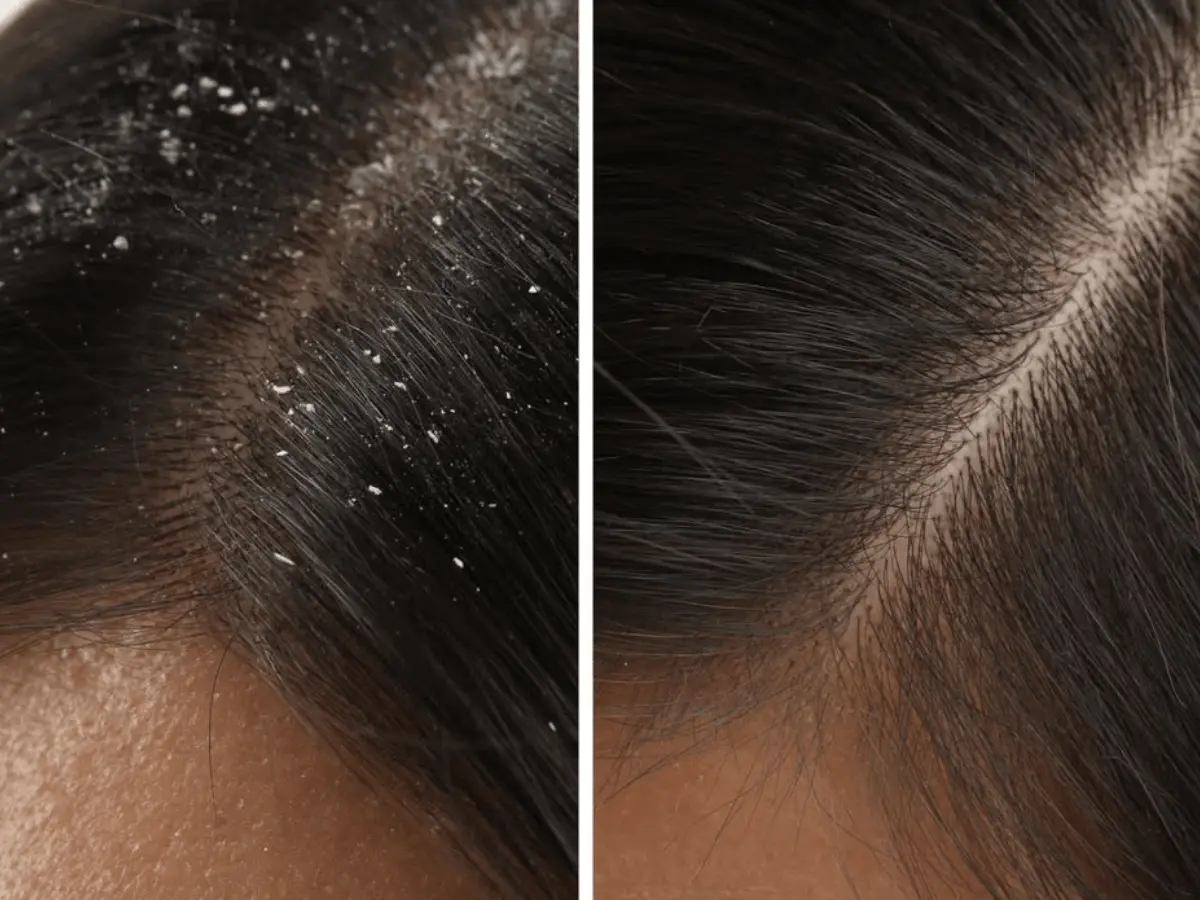
Dry scalp is a lack of moisture and oil — small, dry, white flakes on a tight, often itchy scalp. Dandruff is a condition of an oily scalp, driven by an overgrowth of a naturally occurring yeast called Malassezia — larger, yellowish, greasy flakes, often with redness underneath. They look similar and need opposite treatment, which is why so many people treat one while having the other.
Dry scalp: too little oil
The scalp is skin, with the same barrier of dead cells held together by a lipid matrix. When those lipids are depleted, water escapes, the barrier stops functioning properly, and the surface flakes.
What causes it: cold dry air, indoor heating, hot showers, over-washing, harsh sulphate shampoos, and dehydration. Frequently the scalp version of what happens to facial skin in winter — and the mechanism is identical.
How to identify it: flakes are small, dry, white and powdery. They fall away easily and often land on shoulders. Skin feels tight after washing. Dryness usually appears elsewhere too — face, arms, legs. The itch is a dry, tight itch.
What helps: wash less often, lukewarm water, sulphate-free shampoo, a pre-wash scalp oil, a humidifier, and a proper hat in the cold. Anti-dandruff shampoo makes dry scalp worse, because it is designed to reduce oil that is already insufficient.
Dandruff: a yeast overgrowth on an oily scalp
Malassezia is a yeast that lives on nearly everyone’s skin, feeding on sebum. It breaks sebum down into fatty acids, including oleic acid, which a subset of people react to with inflammation and dramatically accelerated skin cell turnover. Cells that should take a month to reach the surface arrive in days, clumped together with oil.
That is dandruff, and its more inflamed relative is seborrhoeic dermatitis.
What causes it: sebum production, individual sensitivity to those fatty acids, hormones, stress, and cold weather (which paradoxically often worsens it).
How to identify it: flakes are larger, yellowish or off-white, greasy and inclined to stick to the scalp and hair. The scalp itself often looks red or inflamed underneath and feels oily even a day after washing. Can extend to eyebrows, the sides of the nose and behind the ears — a strong diagnostic clue, since dry scalp does not do that.
What helps: active ingredients that control yeast, used consistently — zinc pyrithione, ketoconazole, selenium sulphide, or salicylic acid to remove build-up. Leave the shampoo on for three to five minutes before rinsing; the contact time is what makes it work. Rotate actives if one stops working. Do not wash less — with dandruff, washing more often removes the sebum the yeast feeds on.
| Dry scalp | Dandruff | |
| Cause | Lipid and moisture deficit | Malassezia yeast on sebum |
| Flakes | Small, white, dry, powdery | Large, yellowish, greasy, sticky |
| Scalp condition | Tight, dry | Oily, often red |
| Elsewhere | Dry skin on body | Eyebrows, nose, behind ears |
| Wash frequency | Wash less | Wash more |
| Right shampoo | Gentle, moisturising | Anti-fungal, active |
| Wrong move | Anti-dandruff shampoo | Rich oils and heavy masks |
Is winter hair fall normal?
Yes. Seasonal shedding is well documented, and the increase most people notice in autumn and early winter is real rather than imagined.
Hair grows in cycles: anagen (growing, two to seven years), catagen (transition, a few weeks) and telogen (resting, around three months, after which the hair sheds). At any time roughly 85–90% of hair is growing and 10–15% is resting.
Seasonal patterns push a larger proportion into telogen in mid-summer, and because telogen runs about three months, the shedding shows up in autumn — often extending into early winter. Losing 50–100 hairs daily is normal; a seasonal peak can temporarily exceed that.
Dry indoor air contributes separately by making hair more brittle, so more strands break during brushing and styling. Breakage is not shedding, but it looks the same in the shower drain.
When it is not just seasonal: shedding that continues beyond three months, visibly widening parting or thinning at the temples, hair coming out in clumps, or any bald patches. Significant diffuse shedding — telogen effluvium — can follow illness, surgery, childbirth, rapid weight loss, high stress, or a thyroid or iron deficiency. Iron deficiency in particular is common, easily tested and easily corrected, and it is worth a conversation with your family doctor rather than another shampoo.
What is a scalp facial?
A scalp facial applies facial-treatment logic to the scalp: cleanse, exfoliate, treat and hydrate.
A typical session includes a clarifying wash to remove product and mineral build-up, gentle exfoliation with an enzyme or mild acid to clear dead cells and blocked follicles, massage to stimulate circulation, and a targeted serum or mask — hydrating for a dry scalp, oil-regulating and anti-fungal for a flaky, oily one.
It is not a cure for dandruff, which is a chronic condition needing ongoing management. It does clear build-up thoroughly, which improves how any treatment shampoo works afterwards, and it is genuinely useful before a chemical service. A scalp under a smoothing treatment should be calm — nanoplastia and keratin services should not be applied to an inflamed or broken scalp.
Winter scalp care that works
• Lukewarm water, never hot — hot water strips scalp lipids fastest
• Do not go out with wet hair below freezing; wet hair is structurally weaker and more prone to breakage
• Wear a hat, but avoid tight wool directly against the scalp — cotton or silk lining reduces friction
• Run a humidifier in the bedroom
• Brush gently with a wide-tooth comb; winter static and dry hair make aggressive brushing costly
• Treat the scalp, not just the hair — most conditioner never reaches it
Frequently asked questions
Can you have dry scalp and dandruff at once? Yes — an over-stripped scalp can produce more oil in response, so both can coexist. Alternating a gentle moisturising shampoo with an active anti-dandruff one usually works.
Does dandruff cause hair loss? Not directly, but persistent scratching and chronic inflammation can damage follicles and cause breakage. Treating it protects your hair.
Why does my scalp itch in winter specifically? Cold air holds little moisture and indoor heating removes what remains, so the scalp barrier dries out and itches. Hot showers make it worse.
Is it normal to lose more hair in autumn? Yes. Seasonal telogen shedding peaks in autumn and early winter and usually settles within about three months.
Written by Parull G Chandna at Kaaya Skin & Hair Studio, London, Ontario. See our hair spa and hair care services, or get in touch to have your scalp assessed before a chemical service.